


What is it ?
Following sleeve gastrectomy there is, in the first few years, considerable weight loss (about 60 percent or more of overweight) and without excessive effort. In the long term, however, the patient’s ability to maintain the new eating habits acquired as a result of sleeve gastrectomy, and thus to continue with the recommended dietary regimen, remains crucial
What does it consist of?
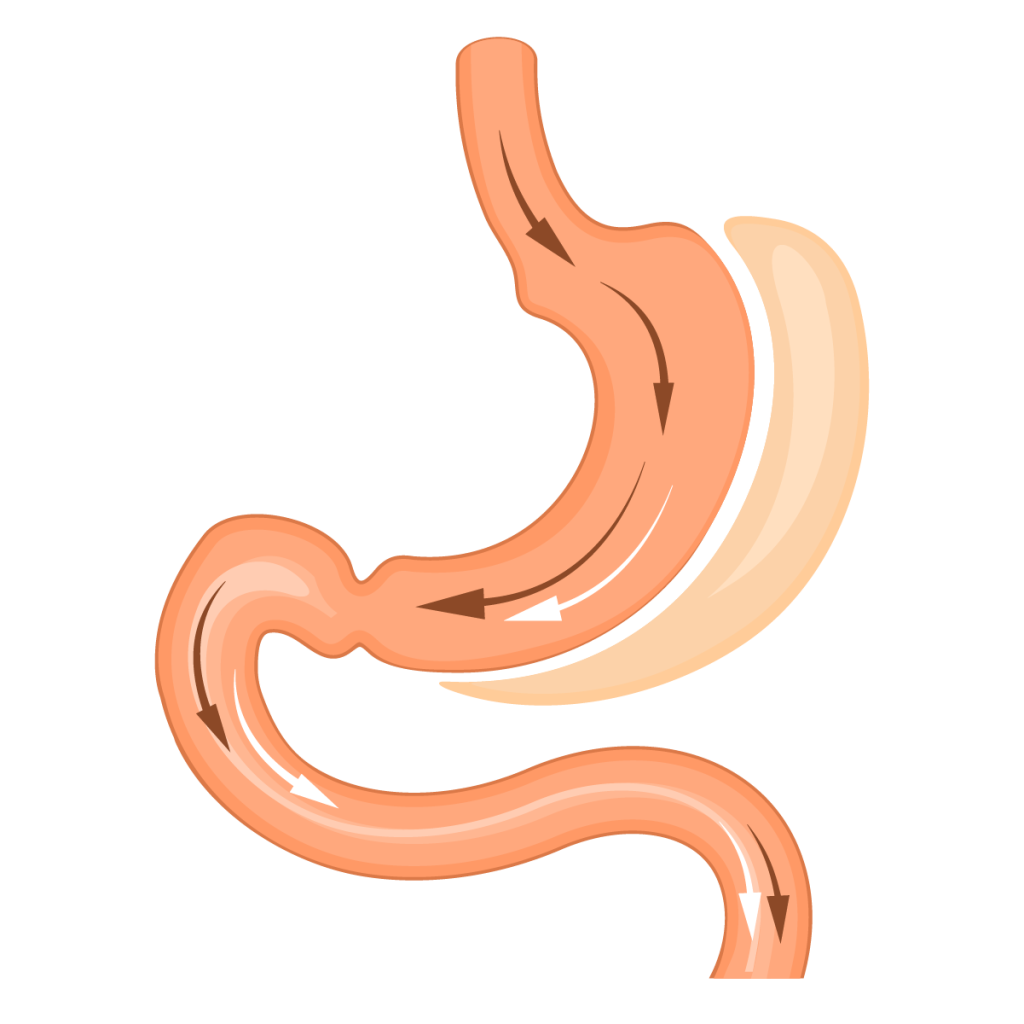
Sleeve gastrectomy is a vertical gastric resection with tubulization of the residual stomach. It is an irreversible operation; in fact, it is not possible to recover the portion of the stomach that undergoes resection.
What are the advantages?
Sleeve gastrectomy is a quick, effective procedure and almost entirely free of nutritional complications (i.e., with minimal postoperative deficiencies). These advantages, together with the good postoperative quality of life, make it the most performed procedure in Italy and worldwide in recent years.
Typically, a loss of about 60 percent of overweight is achieved; the failure rate is higher in patients with a higher BMI (especially above 50).
What may be the typical complications?
It is a surgical procedure, with all the possible complications of abdominal surgery. It may involve some typical complications of the surgery, which are:
Typically, a loss of about 60 percent of overweight is achieved; the failure rate is higher in patients with a higher BMI (especially above 50).
-
Gastroesophageal reflux
-
Constipation
- Not through reduced absorption, but through reduced intake, modest deficiencies of iron, folic acid, and vitamin B 12, especially in women of childbearing age and especially in the first postoperative year
- Vitamin deficiencies acute in case of vomiting continuous
- Stenosis (narrowing) of the gastric tube
Which patients can benefit from it?
Because of its characteristics, it is an intervention that can be performed in most cases: more severe cases of type 2 diabetes or gastroesophageal reflux remain excluded (in the sense that a gastric bypass is more indicated).
In those with BMIs greater than 50, it is fair to warn that it is more likely that the intervention over time will fail (due to weight regain) and that in such cases a second, more powerful surgery (duodenal switch, malabsorptive intervention) may be proposed as part of a so-called “sequential” therapy.
Follow-up
Follow-up visits are essential to optimize weight loss and to prevent or treat some possible complications (gastroesophageal reflux, iron and vitamin deficiencies)
Are there preparedness standards?
No special preparation is needed for sleeve gastrectony, other than an esophagogastroduodenoscopy in order to rule out reflux esophagitis and possible gastro-duodenal pathology.
